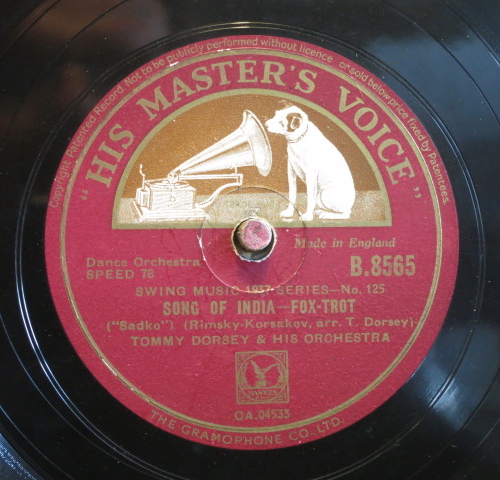
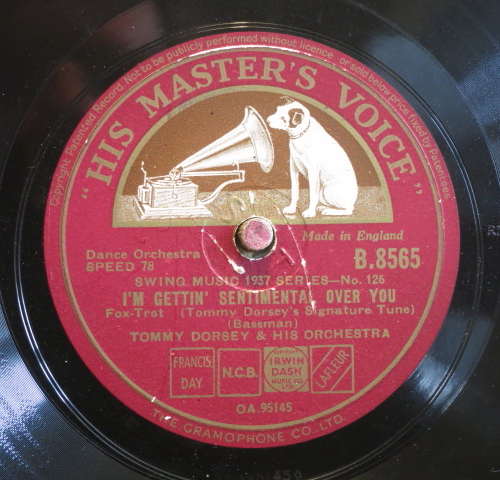
Der Schellackplatten-King aus Bochum präsentiert diese originale 78 RPM Schellackplatte von Tommy Dorsey & His Orchestra mit den Titeln „Song Of India“ und „I’m Gettin’ Sentimental Over You“, zwei prägnanten Aufnahmen aus der frühen bis mittleren Swing-Ära. Die Aufnahmen entstanden ca. 1935–1936 in den USA (Victor) und wurden als UK-Pressung auf His Master's Voice etwa zwischen 1937 und 1938 in Europa veröffentlicht. Diese europäische HMV-UK-Ausgabe verbindet zwei zentrale Seiten des frühen Dorsey-Sounds: „Song Of India“ zeigt eine farbenreiche, leicht exotisch gefärbte Big-Band-Interpretation mit klarer Struktur und orchestraler Tiefe, während „I’m Gettin’ Sentimental Over You“ als ikonisches Erkennungsthema Dorseys in einer besonders weichen, melodisch fließenden und stilistisch prägenden Fassung überzeugt. Beide Titel dokumentieren eindrucksvoll die künstlerische Reifephase des Orchesters in den Jahren vor dem großen Swing-Boom. Gerade diese Kombination aus zwei der wichtigsten frühen Dorsey-Aufnahmen macht diese UK-Pressung für Sammler besonders interessant und hebt sie innerhalb der frühen HMV-Veröffentlichungen deutlich hervor.
This original 78 RPM shellac record by Tommy Dorsey & His Orchestra features “Song Of India” and “I’m Gettin’ Sentimental Over You,” two defining recordings from the early to mid swing era. The tracks were recorded around 1935–1936 in the United States (Victor) and issued as a UK pressing on His Master's Voice for the European market around 1937–1938. This HMV UK release combines two essential aspects of early Dorsey’s sound: “Song Of India” presents a richly colored, slightly exotic-tinged orchestral arrangement with strong structure and depth, while “I’m Gettin’ Sentimental Over You,” his signature theme, is delivered in a smooth, lyrical and stylistically defining interpretation. Together, they reflect the artistic maturity of the orchestra prior to the peak swing era. The pairing of these two key early Dorsey recordings makes this UK pressing particularly appealing to collectors and sets it apart within the early HMV issues of the period.